
Tracking historical flight data for American Airlines flight numbers requires more than a basic flight lookup. Flight numbers can be reused, suspended, relaunched, or assigned to different routes over time, so long-term analysis needs structured historical flight status data with effective dates, routes, schedules, and aircraft information.
A question many professionals ask is: How do I track the history of American Airlines flight numbers over the years?
For enterprise users, the goal is not only to check whether a flight was delayed yesterday. The real challenge is understanding how a flight number changed across years, including route changes, schedule changes, aircraft assignments, and periods of suspension. Without this context, historical assessments can become misleading.
What Flight Number History Means
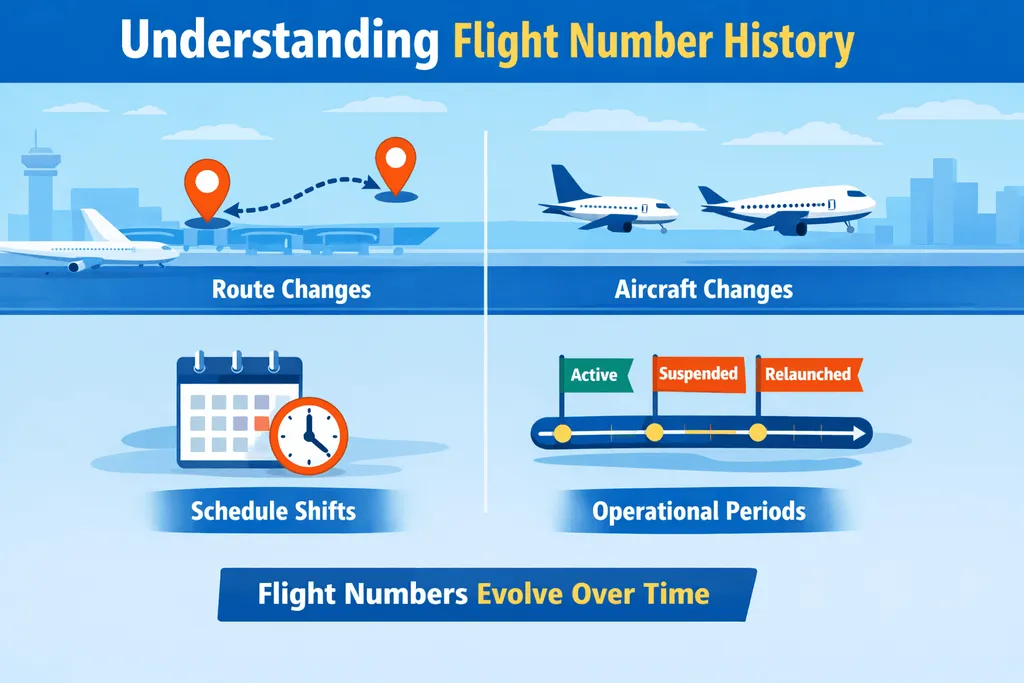
A flight number such as AA108 does not represent a single, permanent flight. Over the years, the same American Airlines flight number may be associated with:
- Different routes or airport pairs
- Different aircraft types
- Changes in departure times and frequencies
- Periods of suspension and relaunch
From a data perspective, a flight number is time-dependent. Without a time dimension, historical analysis quickly becomes inaccurate.
Why Tracking Flight Number History Is Difficult
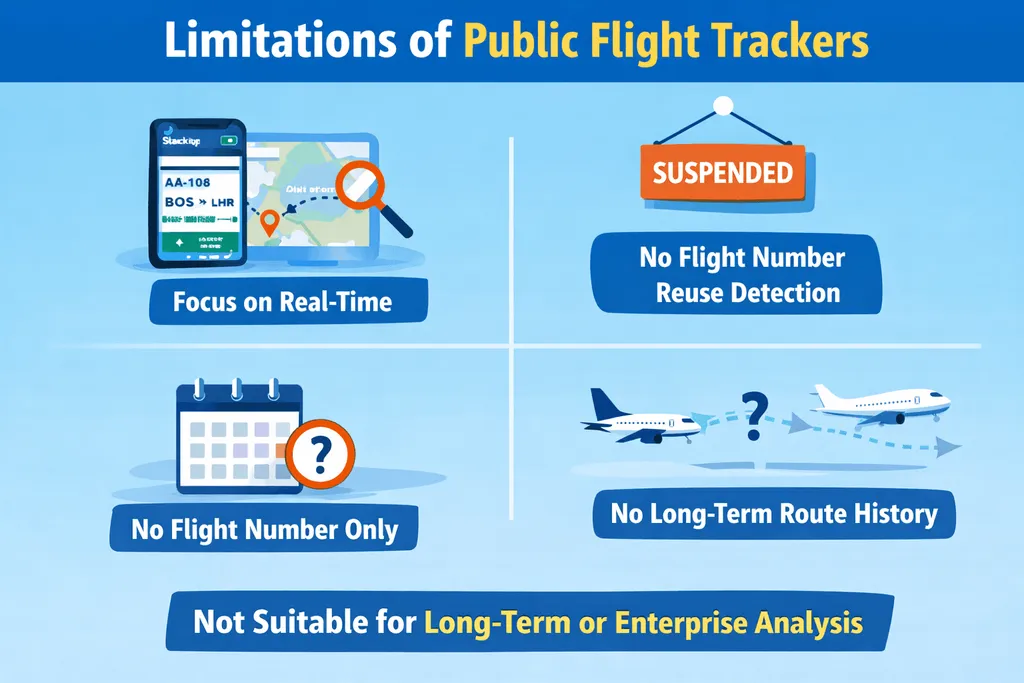
Most public flight tracking tools are built for passengers. They focus on:
- Real-time flight status
- Recent historical lookups
- Individual flight searches
They typically do not show:
- When a flight number was first introduced
- When it was suspended or reused
- How routes or aircraft changed over multiple years
- Clear effective date ranges for schedules
As a result, they are not suitable for long-term or enterprise-level evaluation.
A Practical Example: American Airlines AA108
A common example in aviation and frequent-flyer groups is American Airlines flight AA108, which operates between Boston (BOS) and London Heathrow (LHR).
When American Airlines restarted the BOS-LHR route, it reused the AA108 flight number. That means the same flight number may appear across different operating periods, each with its own schedule, aircraft, and performance profile.
From a historical data standpoint, this means:
- The same flight number existed in multiple operational periods
- Each period had different schedules, aircraft, and performance characteristics
- AA108 cannot be treated as a single continuous flight without time context
A time-based historical flight schedule can separate these different versions and support meaningful comparisons, such as delay trends, capacity changes, and route performance.
How Businesses Actually Track Flight Number History
For enterprise use cases, tracking American Airlines flight number history requires historical aviation data, not real-time trackers.
A reliable solution should provide:
Flight number effective start and end dates
Historical routes and airport pairs
Aircraft type changes over time
Schedule and frequency history
Structured data suitable for analysis and system integration.
This approach allows businesses to accurately reconstruct how a flight number evolved year by year.
Beyond American Airlines: Why Global Coverage Matters
American Airlines is only one airline, but the same pattern applies across the industry.
Airlines worldwide frequently reuse, relaunch, or reassign flight numbers.
That is why enterprise users typically rely on global historical flight data sets, rather than airline-specific sources.
Our historical aviation data covers:
- 1200+ airlines worldwide
- 10000+ airports globally
- Multi-year historical flight schedules
- Time-aware flight number lineage
- API and bulk data delivery options
This enables businesses to track flight number history consistently, whether they are analyzing one airline or an entire network.
Who Uses Historical Flight Number Data
- Travel platforms and OTAs normalize historical bookings and itineraries
- Insurance and risk teams analyze disruption patterns over time
- Corporate travel systems validate past trips and expenses
- Analytics and AI teams build clean, time-consistent datasets
In all these cases, the key requirement is the same: accurate historical context for each flight number.
Final Thoughts
So, how do you track the history of American Airlines flight numbers over the years?
The answer lies in time-based historical flight data that captures how each flight number has changed across routes, schedules, and aircraft.
Public trackers can show what a flight is doing today, but only structured historical data can explain what it meant in the past.
With data from over 1,200 airlines and 10,000 airports, VariFlight DataWorks helps teams analyze flight number history accurately and consistently.
Explore the Flight Status Data API to access real-time and historical flight data for route analysis, disruption monitoring, and enterprise aviation analytics.