Parametric insurance is a new approach in travel insurance that improves travel insurance flight delay claims. By using accurate and timely flight data, insurers can verify and process these claims more efficiently.
This article explains problems with traditional travel insurance. It shows how flight data supports parametric insurance. It also shares real examples and answers common questions.
Article structure:
What is parametric insurance and how does it improve flight delay claims
Why traditional travel insurance struggles with flight delay compensation
How flight data enables parametric travel insurance to work efficiently
Real-world examples of parametric insurance improving flight delay claims
Common questions about parametric insurance and travel claims
How to use flight data APIs to build smarter insurance products

What Is Parametric Insurance and How Does It Improve Flight Delay Claims
VariFlight DataWorks is a global aviation data provider. We supply real-time and historical data on flight delays, cancellations, and airport performance to help insurers.. It does not require lengthy paperwork or subjective reviews.
In travel insurance, parametric products trigger payments when specific flight delays happen.
If a flight is delayed over 90 minutes, insurers check trusted flight data to confirm the delay. This helps process claims faster and more accurately.
Unlike traditional insurance, which requires customer-submitted documents and manual validation, parametric insurance relies on objective, real-time flight data. This improves fairness and speeds up the claims process, helping insurers reduce operational overhead.
VariFlight DataWorks is a global aviation data provider. We supply real-time and historical data on flight delays, cancellations, and airport performance to help insurers. Each disruption becomes a measurable, trackable data point to support better insurance product design and claims processing.
Why Traditional Travel Insurance Struggles with Flight Delay Compensation
Traditional flight delay insurance depends heavily on manual claims processing. Travelers often must submit boarding passes, delay confirmations, or photos to prove their claim. This creates a poor customer experience and high administrative costs for insurers.
Key pain points include:
Delay Definition Uncertainty: Different countries, airlines, and insurers define “delay” differently. Is it based on departure or arrival time? Is it 2 hours or 3?
High Fraud Risk: Travelers may exaggerate delays, requiring insurers to cross-check data manually.
Slow Processing: Claims often take days or weeks due to data collection and validation steps.
Disputes: Without a single source of truth, disagreements between customers and insurers are common.
These issues reduce trust and efficiency, problems parametric insurance models aim to address.
How Flight Data Enables Parametric Travel Insurance to Work Efficiently
For parametric flight delay insurance to function effectively, three elements are essential:
Clear Trigger Condition: For example, “Flight arrival delay exceeds 90 minutes.”
Trusted Data Source: Verified flight status data from APIs like VariFlight’s.
Efficient Claims Handling: Improved workflows enabled by precise data to assist human adjusters.
Beyond Basic Verification: The Data Capabilities Behind a Reliable Trigger
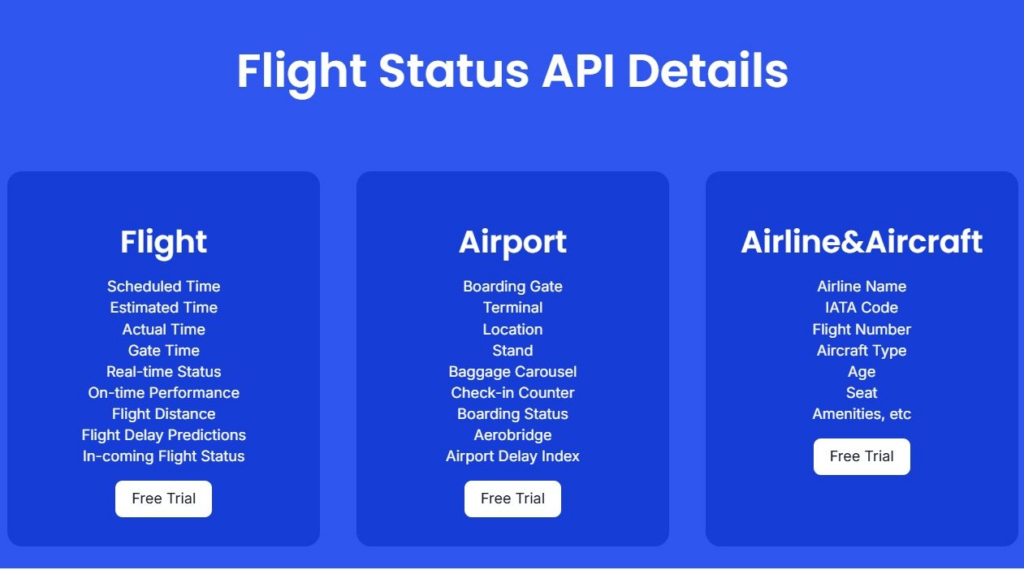
A trustworthy trigger condition depends on more than a single delay timestamp. In practice, insurers building parametric products draw on four distinct layers of flight data:
- Real-Time Flight Status Data: Live departure, arrival, and gate times updated continuously across global routes.
- Delay Prediction Engine: AI-based ETA modeling that factors in historical performance, weather conditions, and airport congestion—allowing insurers to anticipate a likely payout before the trigger is even confirmed.
- Historical Punctuality & Route Profiles: Past delay rates broken down by flight number, route, aircraft type, and airline, used to calibrate trigger thresholds and pricing.
- Flight Disruption Classification: Identification of the underlying cause of a delay—weather, air traffic control, or mechanical issues—which insurers can use for exclusion clauses or cause-based dynamic pricing.
This layered approach also supports product designs beyond simple delay payouts, including tiered compensation structures (larger payouts for longer delays) and embedding coverage directly into banking apps, not just travel booking platforms.
VariFlight DataWorks provides:
Real-Time Flight Status APIs: Instant verification of delays and cancellations.
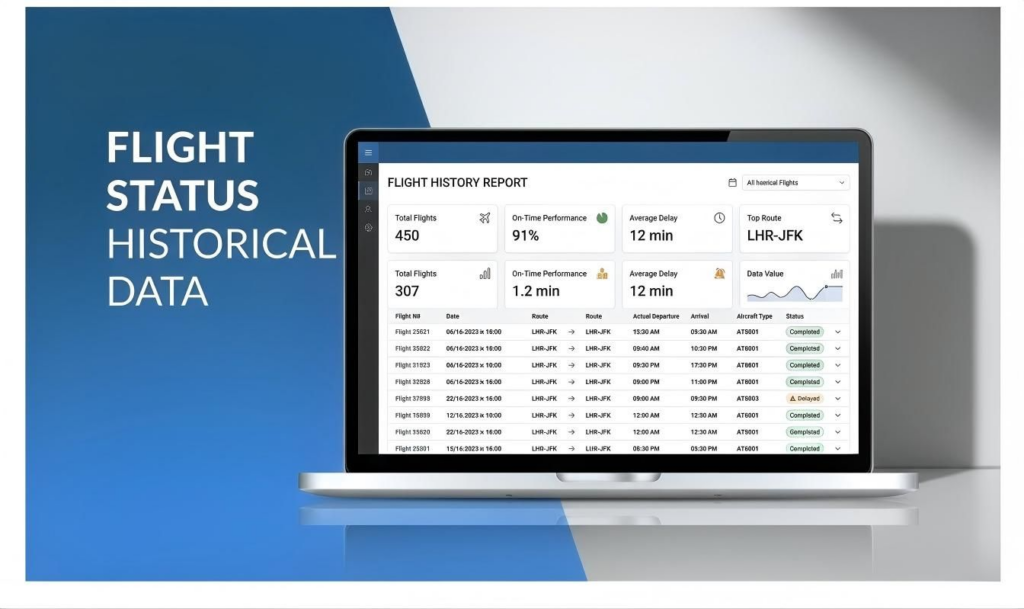
Historical Delay Data: Supports risk modeling and premium pricing.
Airport and Route-Level Analytics: Helps insurers define smarter parametric thresholds.
These tools transform abstract risk into measurable outcomes, enabling insurers to write objective rules, improve claim accuracy, and reduce fraud and delays in claim handling.
How Flight Data APIs Support Parametric Flight Delay Insurance Workflows
Case 1: Asian Insurer Improves Delay Claims Efficiency
An Asia-Pacific insurer used VariFlight’s flight status API to launch a parametric delay insurance product. When customers’ flights were delayed over 2 hours, insurers used our real-time data to quickly verify claims. This way of using data helped cut claim processing time from 5 days to less than 30 minutes. It greatly improved customer satisfaction and work efficiency.
Case 2: Risk-Based Pricing Using Historical Delay Data
A European digital insurer accessed VariFlight’s historical data to model delay likelihoods by route and airline. They built dynamic pricing models charging lower premiums for reliable routes and higher ones for riskier flights. This approach increased profit by 12%.
Case 3: OTA Adds Parametric Insurance as Booking Add-On
A major online travel agency integrated parametric flight delay insurance into its booking system. Using real-time delay feeds from VariFlight, the insurance product became a popular upsell, especially among business travelers. Customers praised the transparency and speed of claim verification supported by accurate data.
Real-World Examples of Automated Flight Delay Insurance
Flight delay insurance is already live in multiple markets:
- AXA Fizzy pioneered blockchain-based automatic payouts for flight delays, removing claims paperwork entirely — the smart contract self-executes as soon as delay data confirms eligibility.
- Erste Bank, in partnership with insurtech Companjon, embeds flight delay protection directly inside its banking app, converting a passive travel benefit into an always-on insurance product tied to real-time flight data.
- OTAs increasingly offer parametric delay insurance as a checkout add-on, triggered automatically by the same real-time data feeds used for flight status alerts.
With European flights averaging 17.5 minutes of delay in 2024, the frequency of qualifying events makes parametric models commercially viable at scale.

Precision at the Core: Verifying the “Date of Loss”
Every parametric claim depends on establishing an exact, defensible “Date of Loss”—the precise date and time a covered flight event occurred. Real-time flight data allows insurers to automate this determination rather than rely on claimant-submitted documentation.
Data coverage supporting verification:
- Over 1,200 airlines and 10,000 airports, covering approximately 97% of global commercial flights
- An ADS-B tracking network monitoring more than 66,000 aircraft daily
Typical claims timelines this replaces:
- Standard, manually verified delay insurance: claimants submit proof within 7–15 days, with verification taking a further 5–10 business days
- Simplified, API-verified products: verification and payout complete within 1–3 business days
- Fully automated, airline-integrated systems: settlement can be near-instant
Automated verification workflow:
- Claimant submits flight number and date
- System queries the flight data API for delay or cancellation records
- The system matches the event to generate the official Date of Loss
- If the trigger threshold is met, the claim proceeds automatically; otherwise it is flagged for manual review
This workflow also correctly handles multi-leg and connecting itineraries, reducing the errors and disputes that arise when responsibility for a delay must be attributed to a specific flight segment.
Extending Flight Data Beyond Claims: Proactive Customer Experience
Flight data doesn’t have to wait for a claim to create value. A Germany-based insurtech company integrated real-time and historical flight datasets directly into its backend systems to validate travel disruption claims—including delayed, canceled, and overbooked flights—cutting both support load and resolution times.
Beyond claims validation, insurers are using the same data feeds to offer value-added services that build loyalty before a claim is ever filed:
- Proactive delay and gate-change notifications sent directly to policyholders
- Baggage carousel information shared alongside claim status updates
- Route- and airline-level statistics used to flag high-risk itineraries at the point of sale
Treating flight data as a customer-experience tool—not just a claims-verification tool—turns an insurance policy into an ongoing travel companion rather than a one-time transaction.
Common Questions About Parametric Insurance and Travel Claims
Q: What is parametric travel insurance?
A: It’s a kind of insurance that pays when certain events happen, like a flight delay over 90 minutes. Customers don’t need to send lots of papers or wait a long time.
Q: How does parametric insurance differ from traditional flight delay insurance?
A: Traditional insurance often requires travelers to provide proof of delay. Parametric insurance relies on third-party real-time flight data to confirm events and assist claims verification.
Q: Can parametric insurance reduce fraud?
A: Yes. Because claims use trusted data from VariFlight’s APIs, there is less chance of cheating or lying.
Q: Is parametric insurance widely accepted globally?
A: Adoption is growing, especially in Europe and Asia. Insurers can move from slow, reactive claims to fast, data-driven service by using real-time flight data and clear rules.
How to Use Flight Data APIs to Build Smarter Insurance Products
If you’re an insurer, insurtech company, or travel provider, follow these steps to implement parametric insurance:
Define Trigger Conditions: For example, “Delay exceeds 90 minutes.” Use historical data to test frequency.
Integrate Real-Time Flight Data APIs: Access up-to-date information on delays, arrivals, and cancellations.
Optimize Claims Workflows: Use accurate data to support adjusters in faster claim verification and decision-making.
Monitor and Refine: Use analytics dashboards to track performance and adjust products to maximize profit.
VariFlight offers easy-to-integrate data services with reliable uptime, global coverage, and enterprise-grade service level agreements.
Get Started with Parametric Flight Delay Insurance Powered by Real-Time Data
Parametric insurance is more than a trend—it’s the future of travel protection.
From Compensation to Prevention: Proactive Risk Scoring as a Product Layer
Parametric payouts address delays after they happen. A complementary approach uses aviation data to help travelers—and insurers—anticipate risk before departure. A multi-dimensional “Travel Safety Index” combines historical flight safety records, airline and airport performance ratings, and weather pattern data into a single risk score for a given route.
This index can power product features that sit alongside a delay-payout trigger:
- Automated package recommendations at the point of purchase, suggesting appropriate coverage levels based on route risk
- Proactive alerts for severe weather or elevated delay risk ahead of a trip
- Dynamic coverage upgrades offered specifically for higher-risk routes, rather than a flat product across all itineraries
For insurers, this reframes flight data from a claims-verification input into a differentiation tool: a way to market insurance as a “travel safety companion” rather than a purely reactive reimbursement product.
VariFlight DataWorks helps you:
Launch parametric flight delay insurance products quickly
Reduce claim processing friction and errors
Price policies are flexibly based on real-world data
Ready to enhance your travel insurance offerings?
👉 Contact VariFlight DataWorks for a free consultation or API trial.

References
OECD: Parametric Insurance Explained
EU EC261 Flight Delay Compensation Rules
Insurance Information Institute (III)
FlightAware – Flight Delay Statistics and Analysis
Parametric Insurance Association (PIA)