

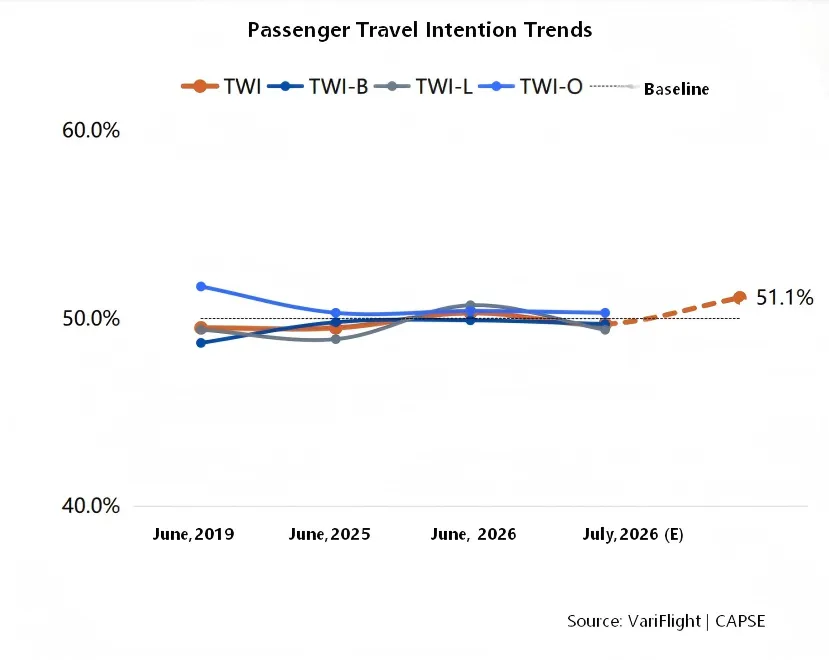
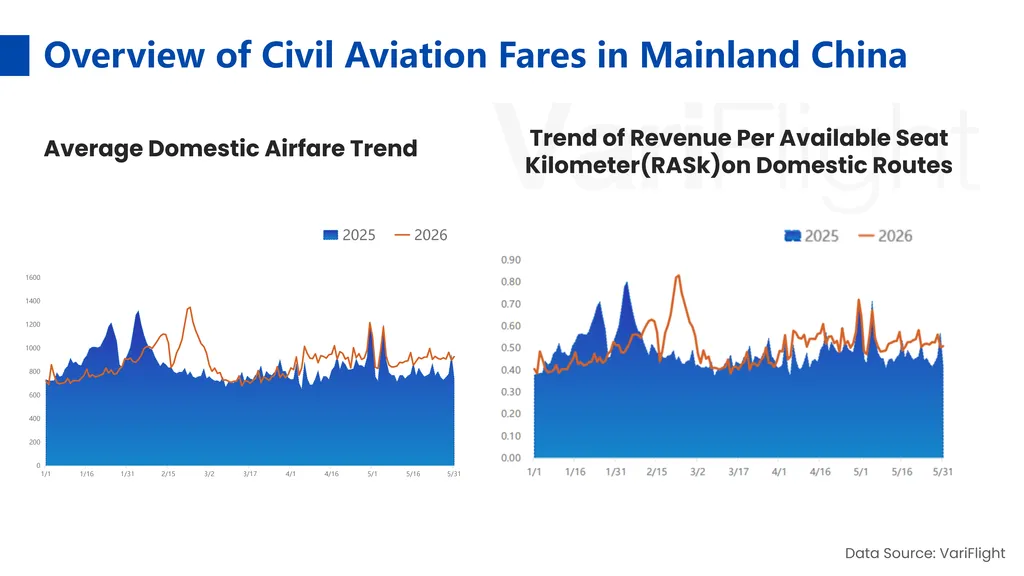
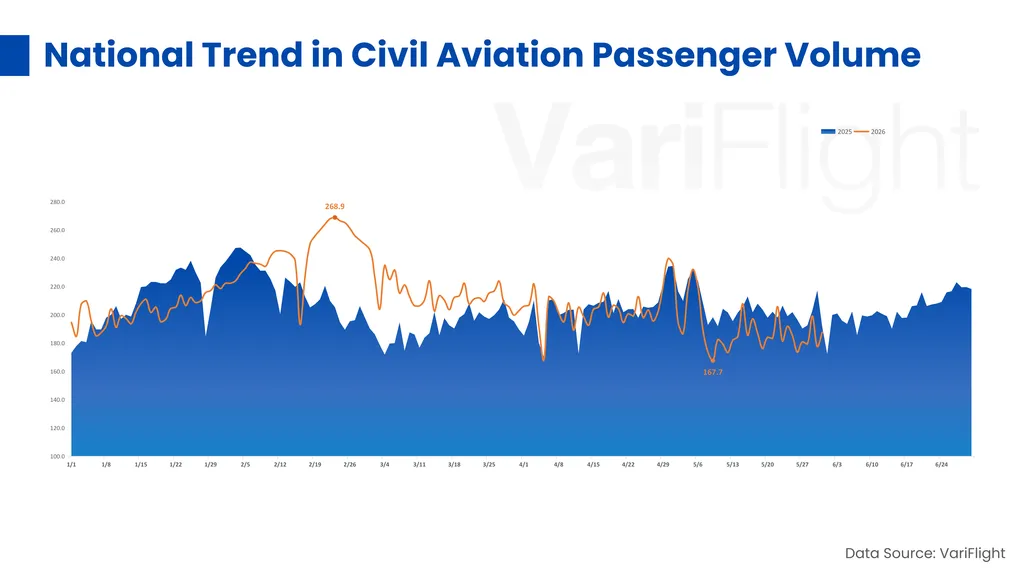
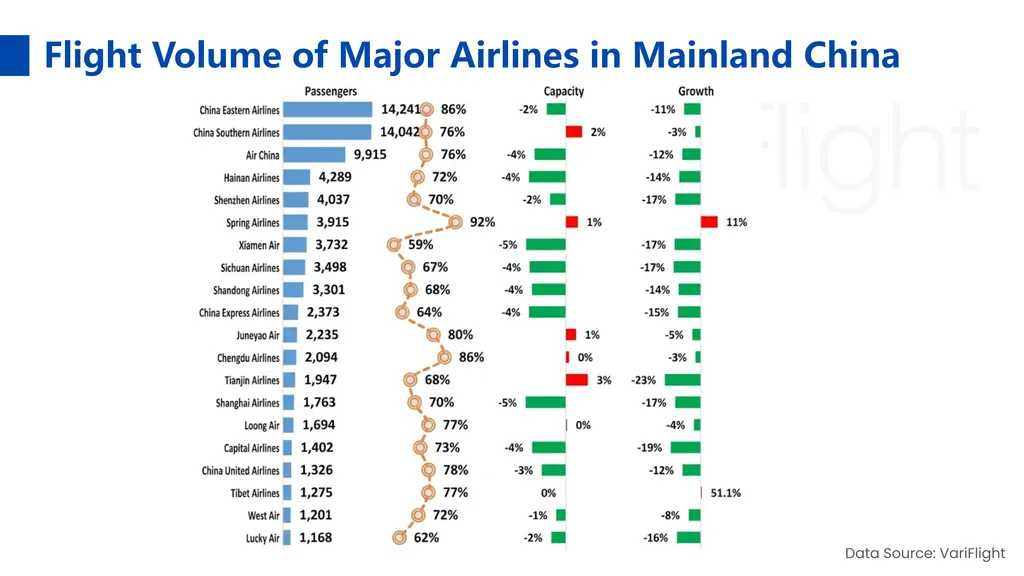
According to the latest Civil Aviation Weekly Report (May 25 – May 31, 2026) published by VariFlight, analyzing the Mainland China market—our most competitive and robust market for aviation data—provides a powerful case study for the operational challenges facing Travel Management Companies (TMCs) today. Within this specific region, the Business Travel Willingness Index (TWI-B) for June slipped to 49.7%, officially entering the contraction zone. Concurrently, weekly passenger flights dropped by 2% to 89,000. Interestingly, despite this weaker demand, average airfares remained resilient at 920.5 RMB, a 17% increase year-over-year. By examining these metrics from the Chinese market, we can extrapolate a universal truth for TMCs globally: a mix of lower booking volume and higher travel costs puts revenue margins under intense pressure. What appears to be a normal workflow often hides underlying inefficiencies. In aviation operations, efficiency is frequently constrained not by capacity, but by fragmented data flow.
The Hidden Inefficiency in Corporate Travel Operations
Operational inefficiency in travel management is the invisible margin killer occurring when scheduled itineraries disconnect from real-time execution. Most TMC workflows are designed around static booking data stored in isolated relational databases. When a flight schedule changes, the mechanism relies on slow API polling or manual intervention to trigger a system response. For example, a system pulling data every 15 minutes might serve a stale flight status to a corporate traveler who is already rushing to a changed gate. The problem is not an outright system failure, but the normalization of low efficiency caused by data refresh lags. These micro-delays in data synchronization accumulate rapidly, forcing operations teams into a reactive state that increases overhead costs and degrades SLA performance.
Mechanism Breakdown: The Gap Between Scheduled and Real-Time Data
A robust travel management architecture is a system that strictly separates the scheduled data layer from the real-time execution layer. The technical mechanism works by continuously processing live operational updates via webhooks against the original static booking. If a flight experiences a sudden gate change or departure delay, the coordination layer must sync these two environments automatically. However, legacy systems often suffer from cache synchronization issues, displaying outdated departure times to the end user. Without a direct API feed updating the decision layer in milliseconds, TMC platforms cannot trigger automated rebooking workflows. This data isolation prevents accurate predictive operations, directly driving up the cost of manual oversight and agent intervention.
Quantifying the Operational Efficiency Loss
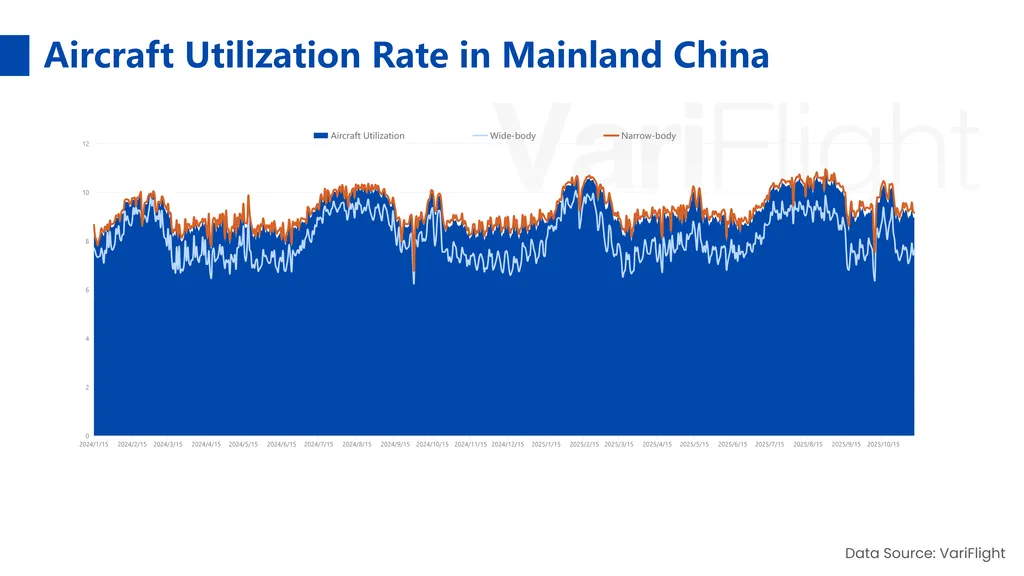
Efficiency loss in travel operations is the direct financial and experiential friction generated when data pipelines fail to reflect reality. The mechanism of loss begins the moment a flight status update is delayed, triggering a cascade of scheduling conflicts across third-party platforms. According to VariFlight, overall domestic aircraft utilization recently dropped by 1.82 percentage points to 8.11 hours per day, indicating operational friction on the supply side. When a specific carrier experiences higher-than-average friction—such as the over 12% departure delay rate observed for certain airlines in late May—the downstream impact on TMCs multiplies. Stale ETA data generates direct cost loss through wasted ground transportation resources, as drivers accumulate idle time waiting at the terminal. It also causes severe experience friction, as the corporate traveler receives conflicting information from the airline and the TMC app.
Real-Time Data Integration: The Cause and Effect on Operations
Real-time aviation data integration is the technical framework that transforms reactive travel management into automated dispatch. When an API pushes a live delay notification into the TMC infrastructure, the system immediately recalculates the estimated time of arrival (ETA). For instance, if an airspace restriction triggers a departure delay, the webhook payload alerts the TMC platform instantly without requiring a polling request. The dispatch logic then automatically pushes an update to the scheduled airport transfer service and the corporate travel manager. This prevents the driver from arriving early, eliminating unnecessary waiting charges and optimizing fleet utilization.
The Compounding Cost of Fragmented Systems
Compounding inefficiency is the long-term deterioration of operating margins caused by relying on manual data compensation. The underlying mechanism involves small data lags and retry logic failures multiplying across thousands of daily corporate bookings. A brief delay in system synchronization might seem minor, but it forces agents to manually manage exceptions for hundreds of affected travelers during a widespread weather event. Systems heavily dependent on human intervention rather than structured data inevitably suffer from inconsistent service levels and SLA compliance failures. As transaction volumes fluctuate, the operational cost structure degrades because the platform lacks the automated elasticity to handle volume efficiently.
Optimization Layer: Deploying Flight Status APIs
An automated decision layer is a unified data architecture utilizing real-time and historical flight APIs to execute operational logic. The mechanism bridges the gap between static schedules and dynamic operations by parsing live ADSB tracking and Airport Delay Indexes with minimal latency. By integrating solutions like the VariFlight DataWorks Flight Status API, a TMC can preemptively identify disruption risks based on live performance metrics. The platform automatically evaluates the update cycle, notifies travelers, and re-routes itineraries before they reach the departure gate. This shift toward real-time infrastructure significantly reduces cumulative operational loss and prevents downstream dispatch errors.
The Industry Shift Toward Predictive Operations
Predictive operations represent the strategic evolution from manual itinerary management to automated, data-driven disruption handling. The mechanism relies on processing historical on-time performance (OTP) indexes alongside live meteorological intelligence to anticipate delays before they are officially announced. VariFlight data shows that while the overall domestic departure delay rate improved by 3 percentage points to 8.1% at the end of May, unpredictable disruptions remain an operational reality for many routes. TMCs leveraging unified data architectures move beyond reactive customer service to proactive enterprise workflow management. This data-driven coordination establishes a resilient infrastructure, maintaining high ROI and operational visibility despite market contractions.
Frequently Asked Questions
What causes inefficiency in aviation operations?
Inefficiency is primarily driven by latency between real-time flight events and the operational decision-making layer. This data gap results in reactive rather than automated operational responses.
How does real-time flight data improve TMC operations?
Live data APIs enable the automatic synchronization of travel itineraries via webhooks. This allows TMCs to adjust downstream services like ground transfers and hotel check-ins without manual intervention.
What is the role of historical flight data in travel optimization?
Historical On-Time Performance (OTP) data allows TMC platforms to calculate the probability of flight disruptions. This intelligence helps corporate clients build more resilient travel policies and optimize SLAs.
What is predictive ETA used for in business travel?
Predictive ETA systems process real-time airspace and weather conditions to dynamically update arrival times. This optimizes resource dispatch and eliminates costly idle wait times for ground services.