
API and MCP solve different parts of the flight-data workflow. Use an API when software needs predictable, repeatable data for dashboards, alerts, or automated operations; use MCP when an AI assistant needs governed access to flight-data tools and must interpret the result in context. Many enterprise teams will use both.
DataWorks is a sub-brand of VariFlight. It focuses on B2B flight data solutions. It offers both APIs and MCP Server(model context protocol mcp) access for different business needs. Understanding the distinctions between real-time system integration and AI-driven data processing is essential for informed decision-making.
API vs MCP: What Is Changing in Flight Data Access?
As airlines, OTAs, and travel tech companies use more AI services, businesses have higher expectations. They want more than just basic dashboards.
They also want advanced API calls. Intelligent decision-making, real-time analyzing, and AI integration are becoming essential. The choice between API and MCP is important for IT leaders and product teams. They must balance efficiency, security, and cost with better data use.
API: Reliable and Direct Data Infrastructure
For enterprises requiring high reliability and standard integration, APIs remain the most mature solution.
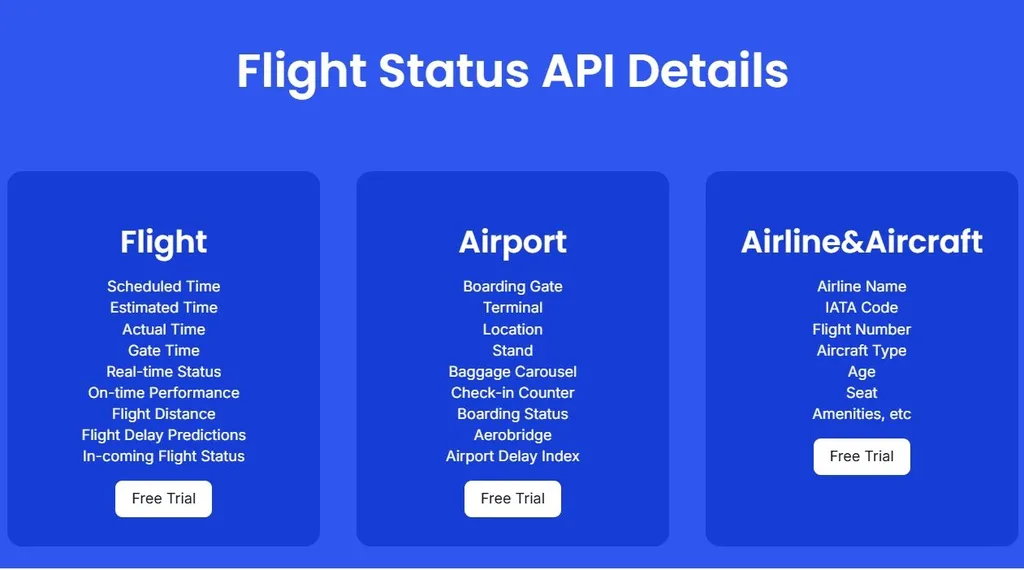
| API Name | Description | Typical Use Cases |
| Flight Status API | Real-time flight departures, arrivals, delays, and cancellations | OTAs, travel tech platforms, airline operational monitoring, punctuality analysis |
| Flight Happiness Index | seat layouts, seat pitch, meal options, and in-flight entertainment data | OTA/TMC pro-booking improving the travel experience |
| Flight Tracking API | Full-flight tracking using global ADS-B networks and multiple data sources | Data analytics, trend identification, model training |
Advantages of API:
APIs provide easy integration with existing systems, fast response times, and predictable data structures. Costs are transparent, and maintenance is straightforward. APIs are good for businesses that need full control over data requests. They allow direct embedding of data into company systems.
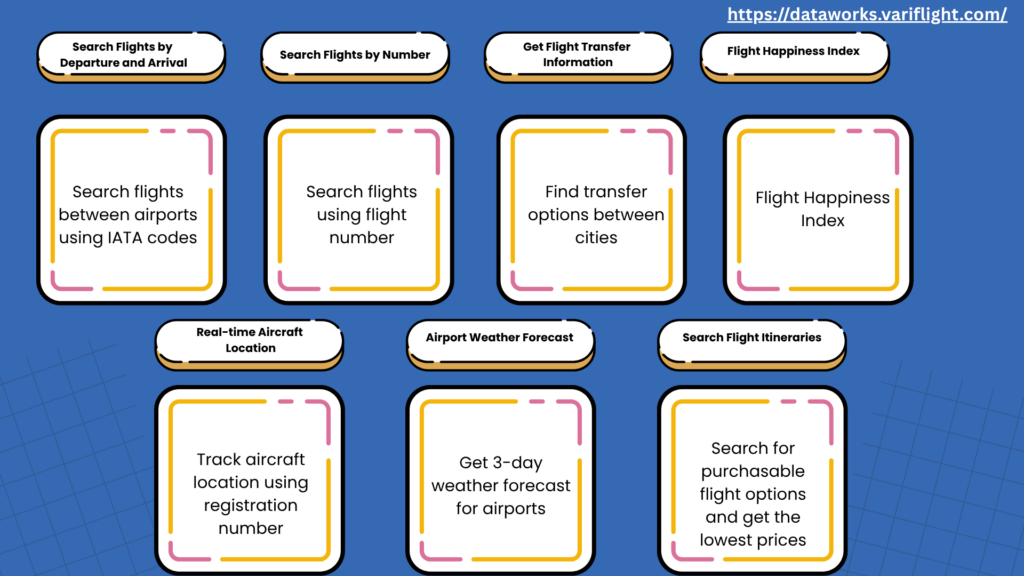
VariFlight Aviation MCP Server: Enabling AI to Understand Flight Data
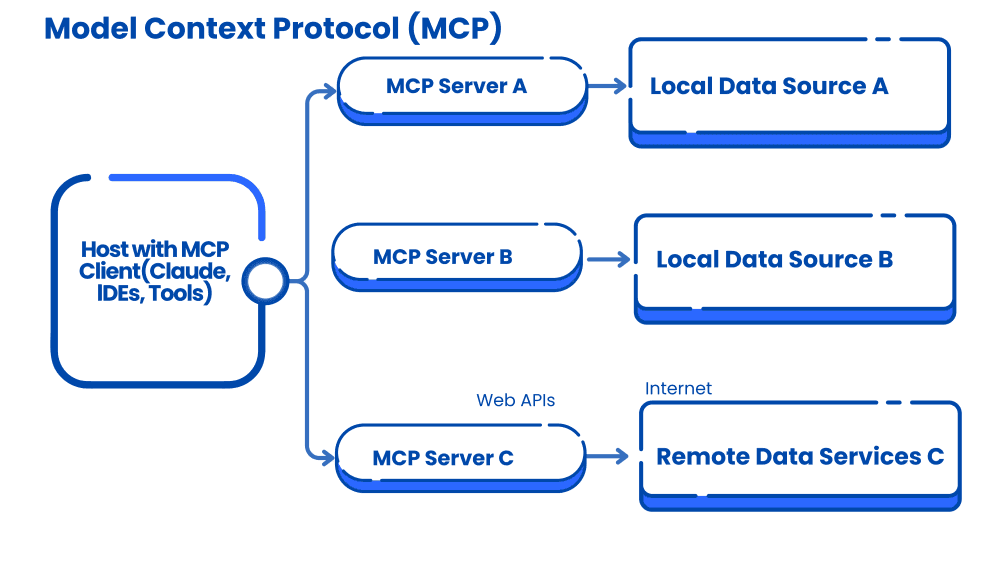
The VariFlight Aviation MCP Server complements APIs rather than replacing them. It gives an AI application a governed way to discover and call flight-data tools, interpret the returned fields, and continue a multi-step request. The underlying data still needs clear definitions, permissions, freshness, and source handling.
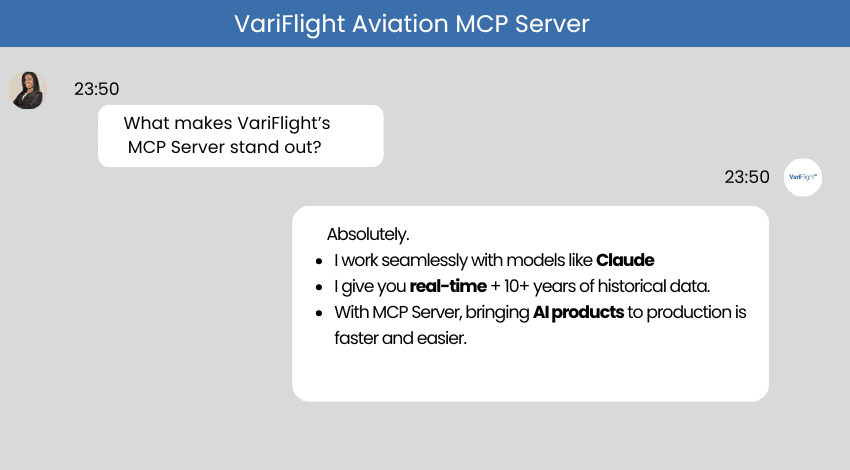
The MCP Server works with Chinese AI models like Volcano Engine and Cursor. It also supports international standards for models like Claude. This allows secure real-time access to flight data.
Typical Use Cases:
Intelligent customer service: AI answers questions like “Is my flight delayed tonight?” directly.
Enterprise agent systems: Automatically generate reports or trigger workflow actions based on flight status.
Data insight AI: Combine historical flight and weather data for predictive analytics.
Core Values of MCP Server:The MCP Server provides AI models with “flight data awareness.” It manages access and permissions with a single protocol. This reduces the need for AI products to rely on backend systems.
API vs MCP: From Human Requests to AI-Driven Automation
Key differences between DataWorks APIs and the VariFlight Aviation MCP Server include:
| Aspects | VariFlight DataWorks APIs | VariFlight Aviation MCP Server |
| Core Definition | Standardized, reliable data interfaces | Enables AI to access data within a model context |
| Primary Users | Developers, system integrators | AI models, smart agents, enterprise agent systems |
| Interaction Mode | Human-defined requests and logic | AI models query and interpret data autonomously |
| Performance & Latency | Fast, predictable structure | Slightly slower, but supports smart decision-making |
| Security | Token validation, whitelist control | Model identity validation, contextual security layers |
| Cost Structure | Based on number of calls | Includes MCP framework, model token use, composite data calls |
| Typical Scenarios | System integration, dashboards, monitoring | AI chat, smart assistants, report generation |
| Enterprise Value | Stable, controllable, scalable | Intelligent, autonomous, future-proof |
Summary:
APIs expose stable data and business events to software systems. MCP connects AI applications to governed tools that can retrieve and interpret that data. The practical choice is not “API or MCP” in every case: APIs usually form the operational data layer, while MCP can add a natural-language and agent layer on top.
Author’s Insights: Choosing Between API and MCP
- APIs remain the primary choice for most enterprises such as OTAs, TMCs, and airline platforms. These organizations require seamless integration into existing systems through data calls and push methods. APIs are simple to implement and align perfectly with operational needs. For single data retrieval or system integration, MCP may require more effort and does not necessarily reduce costs.
- Smarter AI with MCP Server: AI agents are becoming increasingly popular. As a result, enterprises are adopting the MCP Server. It combines flight data with large language models to deliver smarter, more relevant AI for customer service, trip planning, and chat.
- Decision Criteria: Choosing between MCP and API depends on business scenarios and cost considerations. Neither option is inherently better; each has suitable applications.As AI adoption grows, demand for the MCP Server will rise, driving its continued development. However, APIs will continue to have clear use cases. Combining the two approaches for new scenarios may unlock additional value.
- How to Choose: Scenario-Driven Decision Guide: Enterprises should base their choice on user needs and purpose:To integrate systems for dashboards or reports, APIs are recommended for low cost, quick response, and clear structure.
For AI-driven interaction with flight data, MCP Server is preferable, allowing models to query and interpret results autonomously.
For companies seeking both approaches, a hybrid solution combining APIs and MCP Server offers both control and intelligence.
Example: In customer service, MCP Server enables AI to answer questions about flight delays or gate changes instantly. For high-frequency flight monitoring dashboards, APIs are better suited for efficient data retrieval and display.
DataWorks Flight Data Solutions: Unlocking Business Potential
Beyond the API vs MCP choice, DataWorks offers an integrated ecosystem that simplifies flight data acquisition and application.
| Feature | Description |
| Unified Data Access | Harmonized flight data across sources reduces integration complexity |
| Security and Compliance | Strong identity verification, model-based permissions, international data compliance |
| Flexibility for AI and Systems | Developers can add APIs to dashboards; AI teams use MCP Server for independent decision-making |
| Scalable Solutions | Supports both startups and large companies; handles high-volume data retrieval and processing |
Conclusion: Open Collaboration for Smarter Aviation Data
DataWorks, a part of VariFlight, is creating a safe and open B2B flight data system. This system supports both traditional methods and AI-driven solutions.

Both APIs and the VariFlight Aviation MCP Server offer free trials. This lets companies compare and choose the best way to get flight data.
DataWorks invites partnerships with AI platforms and industry leaders. Together, we can explore the future of “data-to-intelligence.” Our goal is to create smarter and more efficient travel experiences.
Learn more and request a trial here:
👉 Free Trial API &MCP Server: DataWorks Free Trial
Connect with Author via Linkedin : Belle Chen
Related blog: VariFlight Aviation MCP Server