
From "Seeing Data" to "Controlling Operations": How Flight Data Optimizes Airline Efficiency
BC
In the high-stakes world of aviation, operational volatility rarely stems from "black swan" events alone. Instead, the root cause is often information asymmetry. When flight statuses, airport systems, and passenger platforms exit sync, small issues can grow into major delays.
True operational efficiency is not just about following a flight plan. It also means keeping data consistent, timely, and useful for all stakeholders.
VariFlight DataWorks: Bridging the Information Gap
VariFlight DataWorks provides a unified data layer that has been validated by global industry leaders. We support carriers like Spring Airlines Japan and Qatar Airways with advanced operational analytics, while providing real-time itinerary monitoring for AirAsia and SunExpress.

Our solution empowers airline operations teams through two core pillars:
1. Global Flight Operational Analytics
Moving beyond single-flight tracking, we provide a holistic view of the global operational landscape. This allows teams to understand structural performance rather than isolated incidents.
- Performance Metrics: Real-time tracking of On-Time Performance (OTP), delay, and cancellation rates.
- Deviation Tracking: Tracking schedule vs. actual time variances.
- Network Intelligence: Insights into route network flow and traffic structures.
- Capacity & Hub Pressure: Monitoring capacity distribution and transit connection risks.
- Recovery Evaluation: Evaluating delay duration and the speed of operational recovery.
- Benchmarking: Cross-airline, cross-airport, and cross-regional comparative benchmarking to provide the necessary external context for decision-making.
2. Itinerary Monitoring & Passenger Sync
We ensure information remains consistent throughout the entire flight lifecycle to reduce "noise" in ground operations.
- Real-time Flight Status: Instant updates on movement.
- Ground Resources: Accurate gate and check-in counter assignments.
- Baggage Logistics: Real-time carousel information.
- Automated Notifications: Instant alerts for any flight changes.
Why Internal Data Isn't Enough
Most airline internal systems are "siloed"—they reflect what is happening within the fleet but lack external situational awareness. Relying solely on internal data leaves a blind spot in:
- Industry Benchmarking: How is your performance trending against competitors?
- Regional Environment: What are the current air traffic control or weather impacts affecting all carriers in a specific zone?
- Peer Performance: Real-time visibility into how other airlines are navigating the same disruptions.
Without this external reference, it is easy to misjudge the nature of a problem, leading to suboptimal resource allocation.
Use Case Analysis
Scenario A: Regional Operations (Middle East Market)
Using sample flight data from March 3, 2026, we analyzed regional performance to drive strategic decisions:
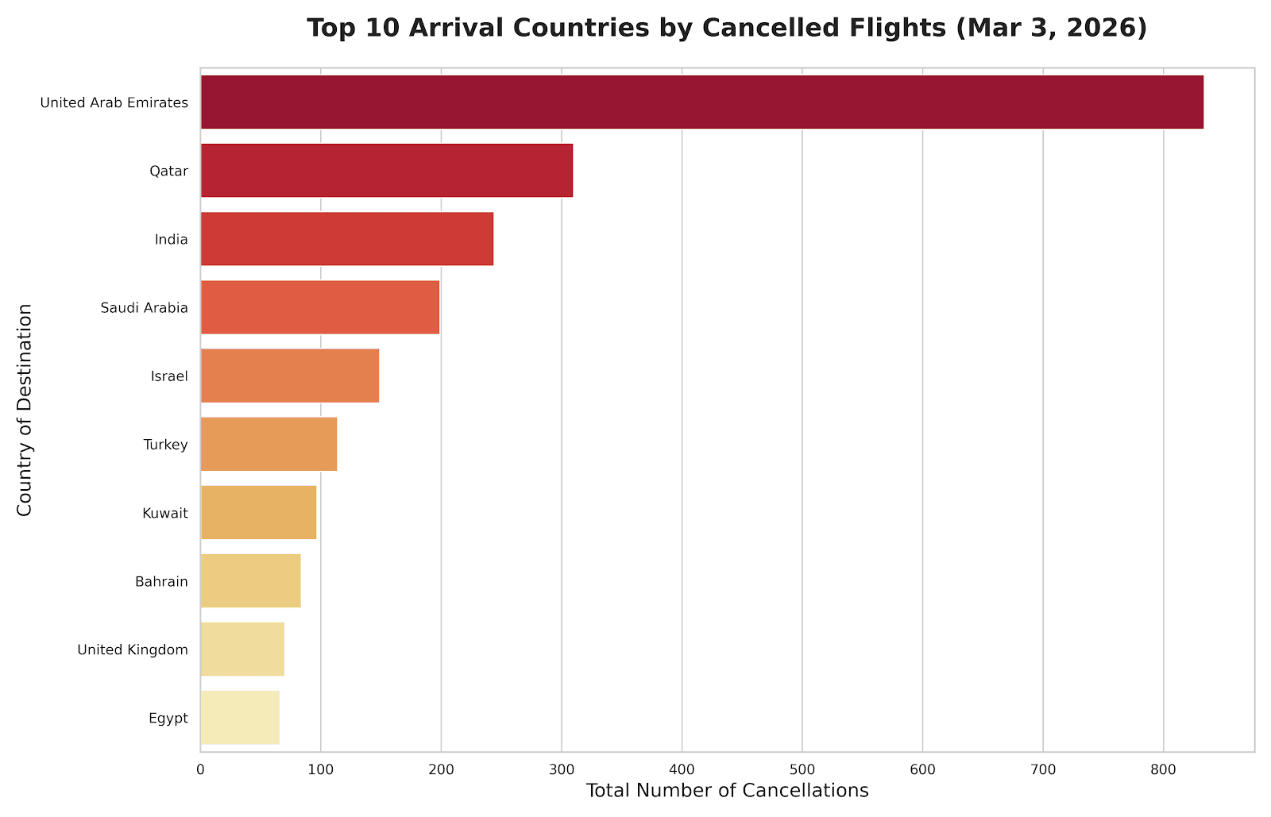
| Dimension | Data Output Capability | Strategic Value for Airlines |
| Efficiency | Real-time OTP, delay, and cancellation stats | Rapidly assess the stability of the regional network |
| Scale | Total flight volume by carrier | Identify dominant carriers and market share distribution |
| Hub Structure | Traffic rankings for hubs (e.g., THR, AYT) | Pinpoint high-pressure nodes and primary flow directions |
| Intensity | Millisecond-level analysis of Schedule vs. Actual | Quantify recovery capabilities during disruptions |
| Temporal Match | 24-hour take-off/landing density curves | Optimize ground crew shifts based on peak traffic |
Scenario B: Ground Control During Disruptions
Comprehensive flight synchronization capabilities cover the entire operational lifecycle, including:
- - Real-time Flight Status: Accurate, live updates on aircraft movement.
- - Gate and Check-in Logistics: Seamless synchronization of terminal resource assignments.
- - Baggage Claim Information: Instant updates on carousel locations for arriving passengers.
- - Automated Change Notifications: Proactive alerts for any schedule or operational adjustments.
The Core Objective:
We ensure total information alignment between airline systems, airport operations, and the passenger. By eliminating data discrepancies, we mitigate operational volatility and enhance the traveler experience. Passengers gain real-time visibility into flight and airport status, improving travel convenience and preventing the costly disruptions and missed connections caused by delayed information synchronization during flight interruptions.
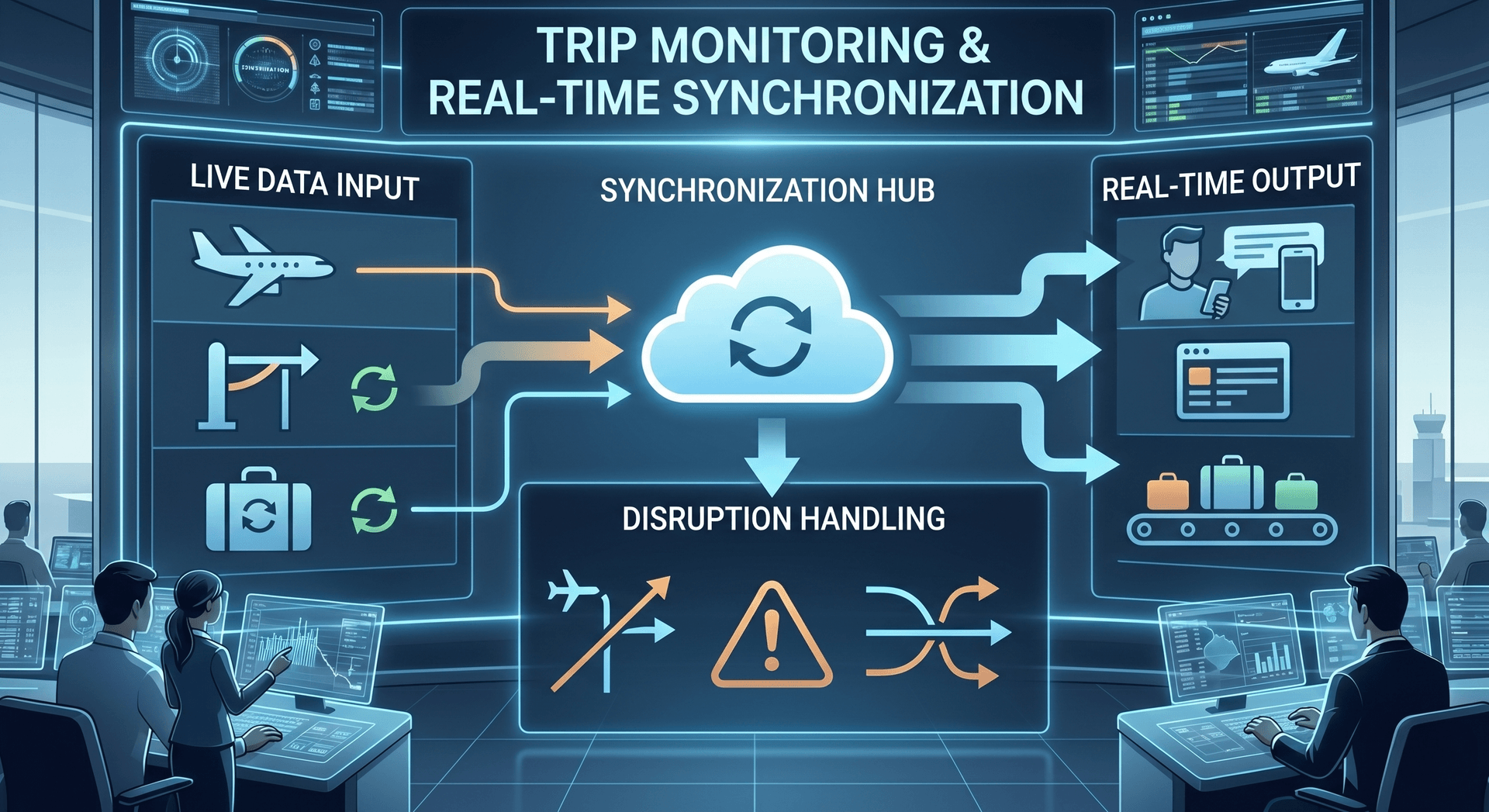
This can reduce the “amplification effect” caused by information errors.
Operational FAQ
- Q: Why invest in external data?
A: Internal data lacks context. External data provides the benchmark needed to distinguish between a systemic regional issue and a localized fleet problem. - Q: How does itinerary monitoring impact the bottom line?
A: Information gaps lead to terminal chaos. Synchronized data reduces the manual workload of ground staff and prevents operational friction. - Q: Can we build this in-house?
A: Yes, but the cost of collecting data from many sources is often too high. Cleaning that data and keeping millisecond-level latency adds more cost than integrated APIs.
"The challenge for modern airline operations isn't a lack of data; it's a lack of perspective. When people make decisions in an internal vacuum, they underestimate risk. Effective operations require a marriage of internal metrics and external visibility."— Jerry Chen, Director of Global Business Development @ VariFlight
Build a More Controllable Operation
Empower your OCC and ground teams with the visibility they need to stay ahead of the curve. Apply for a free trial of VariFlight DataWorks and gain access to:
Comprehensive global flight data samples.
Standardized operational frameworks.
A live demo of our Itinerary Monitoring solutions.
[Contact our Enterprise Team to Schedule a Demo]